
What Medical Cover Does My Event Need? A Guide for Organisers

Planning an event involves far more than choosing a venue, booking suppliers and selling tickets. One of the most important considerations is making sure the right level of medical support is in place.
For many organisers, one of the first questions is simply: what medical cover does my event need?
The answer depends on a number of factors, including the size and type of event, the activities taking place, the audience, the venue, the location and the overall level of risk.
There is no single approach to medical cover for events, which is why good planning should always be based on the specific requirements of the event rather than a standard package.
At Crane Medical Care, we support organisers with event medical planning across a range of different environments. From smaller community events through to sporting fixtures, concerts, festivals and large venues, the aim is always the same: to put the right people, equipment and systems in place to respond effectively if someone becomes unwell or injured.
This guide explains the main factors organisers should consider when arranging event medical provision.
Start With the Type of Event
The type of event you are running will have a significant impact on the medical resources required.
A small corporate event will usually present a very different risk profile to a music festival, stadium fixture or endurance race.
For example, sporting events may involve injuries to participants as well as medical incidents among spectators. Festivals and concerts may see cases linked to alcohol, dehydration, heat, crowd density or prolonged periods of standing. Community events may involve families, children and older attendees, while large venues may require multiple treatment points and mobile response teams.
Before deciding on the level of event medical cover, consider what people will actually be doing at the event and what types of incidents could realistically occur.
The more accurately the event is understood, the more appropriate the medical plan can be.
Consider Your Expected Attendance
Audience numbers are an obvious part of medical planning, but attendance alone should never be used to decide the level of cover.
An event with 5,000 seated attendees may have a very different risk profile to an event with the same number of people participating in physical activity or standing within a crowded festival environment.
The expected number of attendees should be considered alongside other factors, including:
• The age and demographic of the audience
• Whether attendees will be seated or standing
• Whether alcohol is being served
• The length of the event
• The activities taking place
• Previous incident data
• The venue layout
• Weather conditions
• Access to nearby healthcare services
This is why organisers looking for medical cover for events should avoid relying purely on a simple ratio of medical staff to attendees.
The overall picture matters.
Think About the Audience Demographic
Different audiences can present different medical needs.
An event aimed primarily at children and families may need to consider safeguarding, paediatric emergencies and minor injuries. An event attended by an older population may see a greater likelihood of pre-existing medical conditions becoming relevant.
Sporting events can present a mixture of participant injuries and spectator medical incidents, while nightlife-focused events may face higher levels of alcohol-related illness.
The audience profile does not determine the exact number of responders required, but it can help shape the appropriate clinical skill mix and the types of equipment that should be available.
Understanding who is attending is an important part of deciding what medical cover your event needs.
Assess the Activities Taking Place
The more physically demanding or hazardous the activities, the greater the potential need for medical support.
This is particularly important for sporting and outdoor events.
A running race, cycling event, motorsport event or contact sport competition may involve a higher chance of trauma, musculoskeletal injuries and exertion-related medical problems.
By contrast, a seated conference may have relatively low activity-related risk but still require appropriate emergency arrangements for unexpected illness.
Organisers should look at each activity individually and consider:
• The likelihood of injury
• The potential severity of an incident
• How quickly a medical team could reach the patient
• Whether specialist equipment may be required
• How a patient could be safely removed from the area
This information should feed directly into the medical risk assessment.
Review the Venue and Site Layout
Where your event takes place can be just as important as what happens there.
Large, complex or outdoor venues may create additional challenges for medical teams.
Consider how easily responders can move around the site. A patient may be only a few hundred metres away from a medical post, but crowds, barriers, stairs or restricted access can significantly increase response times.
Questions to consider include:
• How many entrances and exits are there?
• Are there areas with restricted access?
• Are there multiple levels or stands?
• Are there suitable locations for medical posts?
• Can an ambulance reach all parts of the site?
• Are there areas where a stretcher may be difficult to use?
• Is there space for patients to be treated privately?
For larger events, event medical services in the North West may include mobile response teams positioned strategically around the site rather than relying on one central first aid point.
Good positioning can make a major difference when rapid assessment is required.
Consider the Event Location
The event's geographical location should also influence planning.
An event in a city centre may be relatively close to emergency departments and ambulance resources, while a remote rural event could be much further from additional medical support.
Organisers should consider:
• Distance to the nearest emergency department
• Access routes for ambulances
• Traffic conditions
• Rural or isolated locations
• Potential road closures
• Access for the statutory ambulance service
• Whether an on-site ambulance resource is appropriate
For organisers searching for event medical cover in Liverpool, for example, local knowledge can be helpful when considering venue access, nearby healthcare facilities and transport routes.
The same principle applies to events across the wider North West.
Look at Previous Event Data
If the event has taken place before, previous medical activity can be extremely useful.
Historical information can help identify the types of incidents that are most likely to happen and where medical resources may be best positioned.
Useful information can include:
• Number of patients treated
• Common types of injury or illness
• Times when medical demand was highest
• Locations where incidents occurred
• Number of patients requiring onward referral
• Ambulance transfers
• Any significant or unusual incidents
This can help organisers move from assumptions to evidence-based planning.
If a particular area of the venue repeatedly generates incidents, for example, it may make sense to position a response team closer to that location for future events.
Decide What Level of Medical Staff Is Appropriate
Not every event requires the same level of clinician.
Depending on the risk assessment, medical provision may include first aiders, first responders, technicians, nurses, paramedics, doctors or a combination of different grades.
The appropriate skill mix should be based on the likely clinical needs of the event.
For example, lower-risk events may primarily require first aid provision, while more complex events may benefit from advanced clinicians who can assess and manage a wider range of medical conditions.
The key question is not simply how many staff are present.
It is whether the right skills are available when they are needed.
A well-planned team may include multiple clinical grades working together, allowing straightforward cases to be managed efficiently while more serious patients are escalated appropriately.
Consider Whether You Need an Ambulance
Some events may benefit from having an ambulance resource on site.
This could support on-site response, patient movement or onward transport, depending on the service being provided and the event plan.
However, an ambulance should not simply be booked because it appears reassuring.
The provider should explain what role the vehicle will play, who will crew it, what equipment is carried and what happens if the ambulance leaves the event.
If the event relies heavily on one vehicle and that vehicle transports a patient away from the site, organisers need to understand what cover remains.
This should form part of the wider medical plan rather than being considered in isolation.
Think About Medical Facilities
Larger events may require a dedicated medical room, treatment centre or first aid post.
The size and complexity of the facility should reflect the expected patient demand.
A suitable medical area should generally allow patients to be assessed safely and with appropriate privacy.
Depending on the event, it may also require:
• Treatment couches or stretchers
• Clinical equipment
• Oxygen and emergency equipment
• Hand hygiene facilities
• Secure medicines storage where appropriate
• Clinical waste arrangements
• Appropriate lighting
• Communication equipment
The location is equally important.
Medical facilities should be accessible to both patients and responders without being placed directly within busy crowd flows.
Plan Communication and Escalation
Medical staff should not operate in isolation from the wider event team.
A strong event medical plan should include clear communication arrangements between medical teams, event control, security, stewards and venue management.
Everyone should understand how to report an incident and how medical teams will be deployed.
For larger events, there should also be a clear escalation process for serious incidents.
This may include:
• Calling additional medical resources
• Requesting statutory ambulance support
• Escalating to senior clinicians
• Activating major incident arrangements
• Liaising with event management
• Coordinating patient evacuation
Good communication can prevent delays and confusion, particularly during busy periods.
Weather Can Change the Medical Requirement
For outdoor events, weather should always be considered.
High temperatures can increase the risk of dehydration, heat exhaustion and heat-related illness. Cold weather may increase the likelihood of hypothermia, particularly at events where attendees are exposed for long periods.
Heavy rain can create slip hazards and complicate patient movement.
Weather conditions may also affect access for medical vehicles and responders.
For multi-day events, organisers should review forecasts throughout the planning process and be prepared to adjust arrangements where required.
A medical plan should be flexible enough to respond to changing conditions.
Why Professional Event Medical Planning Matters
It can be tempting to view medical provision as a simple compliance requirement.
In reality, good event medical cover can have a much wider impact on the event.
Well-planned medical services can help treat patients early, reduce disruption, support event control and ensure serious cases are recognised and escalated appropriately.
Professional providers should also be able to advise organisers where the proposed level of provision may not be suitable.
That advice is an important part of the service.
The aim should not be to provide the largest team possible, but to provide a proportionate and defensible level of cover.
Event Medical Cover in Liverpool and the North West
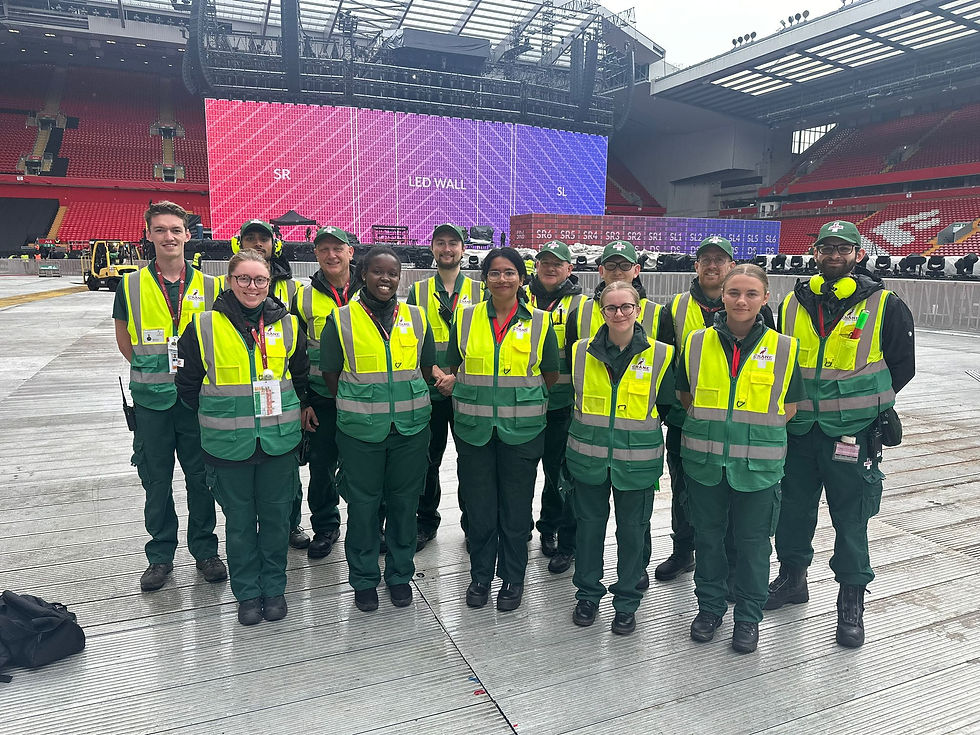
Crane Medical Care provides event medical cover in Liverpool and across the wider North West, supporting organisers with medical planning and on-site provision.
Our approach is based on understanding the event before recommending the level of support required.
We consider factors such as attendance, audience profile, venue layout, activities, previous incident history and access to external healthcare services.
Depending on the event, our event medical services in the North West can include first aiders, clinical teams, mobile response teams, treatment areas and ambulance resources.
The aim is to create a medical plan that works alongside the wider event operation rather than operating separately from it.
So, What Medical Cover Does My Event Need?
There is no single answer.
The right level of medical provision depends on the individual event.
A useful starting point is to consider:
• What type of event are you running?
• How many people will attend?
• Who will be attending?
• What activities are taking place?
• What are the main foreseeable risks?
• How quickly can medical teams reach a patient?
• How far away is additional healthcare support?
• What happened at previous events?
• What clinical skills might realistically be needed?
• What happens if demand suddenly increases?
Once those questions have been answered, an experienced provider can help turn the information into an appropriate medical plan.
Planning an Event?
If you are organising an event and are unsure what level of medical provision you require, Crane Medical Care can help.
We provide professional medical cover for events across Liverpool, Merseyside and the wider North West, with provision planned around the individual needs of each event.
Whether you are organising a sporting fixture, festival, concert, community event, corporate function or large public gathering, our team can discuss your requirements and help identify an appropriate level of medical support.
Contact Crane Medical Care to discuss your event and find out what medical cover may be suitable.

Comments