
Sporting Event Medical Cover: What Organisers Need to Know

Sporting events can create very different medical demands from other types of events.
Organisers may need to consider not only spectators, but also participants, officials, staff, volunteers and contractors, all of whom may face different risks depending on the activity taking place.
Whether you are organising a running event, football fixture, cycling event, tournament or other sporting occasion, appropriate sporting event medical cover should form part of the planning process from an early stage.
The level of medical provision required will vary considerably between events. A small community race will not necessarily need the same resources as a stadium fixture or large road race, while some sports introduce additional risks because of the speed, physical contact or nature of the activity.
The current Purple Guide states that the level of medical cover needed at an event depends on both the scale of the event and the activities taking place, and organisers should assess the risks and put appropriate provision in place.
So what should organisers consider when planning medical cover for a sporting event?
Start With the Type of Sporting Event
One of the first considerations should be the sport itself.
Different activities create different injury profiles and operational challenges.
A football fixture may involve risks associated with player injuries as well as incidents among spectators. A running event could cover several kilometres, meaning medical resources may need to be positioned around a course rather than concentrated at a single location.
Cycling, motorsport and other higher-speed activities may require a different level of planning again.
For example, HSE's guidance for motorsport states that medical and first aid provision should reflect the size and nature of the event alongside other risk factors, and notes that medical personnel and equipment should be positioned so they can reach incidents quickly.
The same underlying principle applies more broadly: sporting event medical cover should be designed around the actual event rather than using a one-size-fits-all staffing model.
Consider Both Participants and Spectators
At many sporting events, there are effectively two distinct groups to consider.
Participants
Competitors may be exposed to injuries and illnesses directly related to the sport.
Depending on the activity, this could include:
sprains and strains
fractures
head injuries
cuts and bleeding
dehydration
heat-related illness
exhaustion
chest pain or other medical emergencies
The likelihood and severity of incidents will vary depending on the sport, participant demographics, environmental conditions and level of competition.
Spectators
Spectators create a different set of considerations.
Large crowds can generate medical presentations unrelated to the sport itself, including falls, illness, fainting, cardiac emergencies or existing medical conditions.
Crowd size, audience demographics, alcohol availability, venue layout and the amount of time spectators will spend onsite can all influence the medical plan.
Although workplace first aid legislation focuses primarily on employees, HSE guidance for sporting environments recommends considering competitors, spectators and volunteers within first aid needs assessments where appropriate, particularly where large groups are gathered or access to other medical services may be limited.
Attendance Numbers Matter — But They Are Only Part of the Picture
It can be tempting to ask:
“How many medics do we need for 2,000 people?”
However, attendance alone does not provide enough information to determine appropriate provision.
Two events with the same attendance could have very different requirements.
A 2,000-person community walk may present a different risk profile from a 2,000-person competitive sporting event involving significant physical exertion or contact.
Organisers should consider:
participant numbers
spectator numbers
event type
age profile
event duration
expected medical presentations
venue or course layout
environmental conditions
previous incident data
access to hospitals and emergency services
The Purple Guide's medical guidance similarly emphasises that provision should be determined through an assessment of the specific event rather than attendance figures alone.
Venue and Course Layout Can Change the Medical Plan
The geography of a sporting event can have a significant impact on medical provision.
At a stadium, resources may need to cover the pitch, stands, concourses, hospitality areas and external areas.
At a running or cycling event, participants may be spread across several kilometres.
A medical team based only at the finish line would therefore not necessarily be able to respond quickly to an incident elsewhere on the route.
Questions organisers should consider include:
Where are participants most likely to require assistance?
Where will spectators be concentrated?
How quickly can medical personnel reach each part of the event?
Are there areas inaccessible to normal vehicles?
Where should medical posts be positioned?
Where can ambulances enter and leave?
Are there suitable routes for stretchers or patient movement?
Venue and site design should account for the safety and welfare of both those attending and those working at the event.
Response Times Depend on Positioning, Not Just Numbers
Having sufficient medical personnel is important, but where those resources are located can be equally important.
A sporting event may use a combination of:
fixed medical posts
treatment facilities
mobile responders
cycle response teams
pitch-side teams
ambulances
strategically positioned first aid personnel
The most suitable arrangement depends on the event.
For a road race, for example, resources might be distributed around the course with additional provision at the finish area.
For a football fixture, there may be separate arrangements for players and spectators.
The objective should be to ensure medical resources can respond effectively to foreseeable incidents across the event footprint.
The Clinical Skill Mix Matters
Organisers should look beyond the total number of medical staff and consider the clinical capability of the team.
Depending on the event, the medical workforce might include personnel with different clinical qualifications and scopes of practice.
The required skill mix should reflect the type of incidents that can reasonably be anticipated.
A sporting event with a significant risk of traumatic injury, for example, may require different clinical capabilities from a smaller, lower-risk community event.
When reviewing a proposed medical plan, organisers should understand:
which grades of personnel are being provided
where they will be positioned
what equipment they will have
what treatment can be provided onsite
how patients will be escalated
who will lead the medical operation
The Purple Guide's current medical guidance specifically covers areas including medical needs assessment, staff qualifications, staffing levels, facilities, communications and off-site transfers as part of good event medical planning.
Does a Sporting Event Need an Ambulance?
Not every sporting event automatically requires a dedicated ambulance.
The need for ambulance provision should be assessed as part of the wider event medical plan.
Factors may include:
risk of serious injury
participant numbers
spectator numbers
distance from hospital
event location
access and egress
treatment capabilities onsite
expected number of casualties
arrangements for onward transport
One particularly important consideration is what happens if a patient needs hospital treatment.
If the event relies entirely on the local NHS ambulance service, an emergency response may also remove an NHS resource from wider community demand.
For some events, dedicated ambulance provision may therefore form part of the planned medical resource.
The appropriate arrangement should be determined during the medical needs assessment rather than being added at the last minute.
Consider Weather and Environmental Conditions
Weather can have a major impact on sporting event medical demand.
Hot conditions may increase the likelihood of dehydration, heat exhaustion and other heat-related problems, particularly during endurance events.
Cold, wind and rain can create different risks, including hypothermia, slippery surfaces and difficult ground conditions.
The venue or course itself may also introduce environmental considerations such as:
uneven terrain
steep gradients
remote sections
muddy ground
limited vehicle access
darkness
water hazards
HSE guidance on emergency planning highlights that factors such as location, terrain and weather conditions can affect first aid requirements and access to emergency services.
Organisers should therefore review forecast conditions as the event approaches and consider whether the medical plan needs to be adjusted.
Communication Is Critical
A medical team needs a reliable way to receive incidents and communicate with other event functions.
At smaller events, arrangements may be relatively simple.
At larger sporting events, communication could involve:
medical control
event control
radio networks
security
stewards
race officials
venue management
ambulance crews
welfare teams
The Purple Guide notes that effective communication is critical for event operations, particularly during emergencies. Where radios are used, personnel should be properly briefed on their use and any agreed terminology.
Organisers should therefore establish clear procedures for reporting an incident, providing an accurate location and requesting additional medical resources.
Use Previous Event Data Where Available
If an event has been held before, previous medical data can be extremely useful.
This could include:
total number of patients
common types of injury
busiest periods
locations where incidents occurred
number of ambulance transfers
serious incidents
staffing or equipment challenges
Historical information helps organisers and medical providers understand what actually happened rather than relying entirely on assumptions.
If the event changes significantly from one year to the next — for example, increased attendance, a new route or longer operating hours — the medical plan should be reviewed accordingly.
Medical Planning Should Form Part of the Wider Event Plan
Medical provision should not operate in isolation.
It should integrate with:
event risk assessments
crowd management
security
emergency planning
traffic management
participant management
welfare
evacuation procedures
venue operations
Good event planning involves understanding the risks and putting proportionate controls in place for both those participating and those attending.
For larger or more complex sporting events, early involvement from the medical provider can make it easier to identify suitable resource levels, treatment locations, access routes and escalation procedures.
What Information Should You Give Your Medical Provider?
When requesting sporting event medical cover, organisers should provide as much useful information as possible.
This may include:
event type
date and timings
venue or route
expected participant numbers
expected spectator numbers
age profile
activities taking place
site or course maps
event risk assessment
previous medical data
known hazards
ambulance access points
local hospital information
event control arrangements
relevant sporting governing body requirements
Providing this information early allows the medical provider to develop a more event-specific recommendation.
Sporting Event Medical Cover in Liverpool and the North West
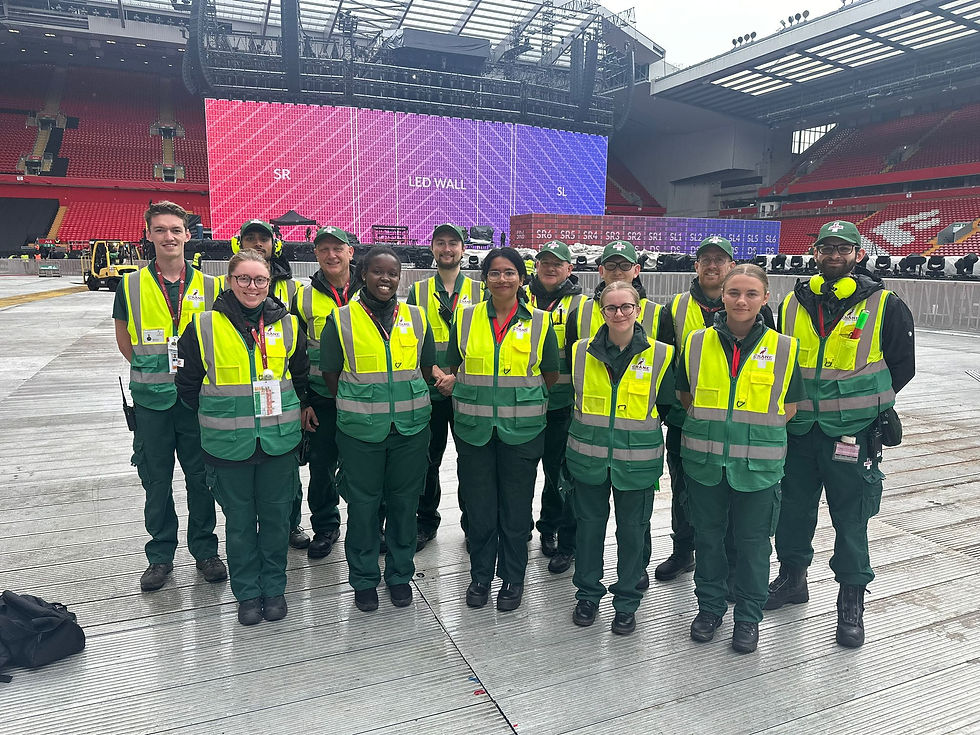
Crane Medical Care provides sporting event medical cover for events across Liverpool, Cheshire, Wirral, the North West and the wider UK.
Our experience includes supporting professional sporting fixtures alongside running events and other sporting occasions.
Depending on the event requirements, provision can include:
medical planning
first aid and medical personnel
fixed treatment facilities
mobile response
pitch-side medical teams
ambulance provision
medical control
patient documentation
post-event reporting
For organisers looking for sporting event medical cover in Liverpool, provision can be tailored around the venue, number of participants and spectators, event layout and identified medical risks.
Planning a Sporting Event?
Appropriate medical provision should be based on the specific risks and operational requirements of your event rather than a simple headcount.
Considering participant risks, spectators, venue layout, medical response routes, clinical skill mix and onward transport arrangements early in the planning process can help create a more effective medical plan.
If you are organising an upcoming sporting event, Crane Medical Care can discuss your event requirements and help determine an appropriate level of medical provision.
Contact our team to discuss sporting event medical cover for your upcoming event.
This article provides general information for event organisers and does not replace an event-specific medical needs assessment, risk assessment, relevant governing-body requirements or advice from the appropriate authorities.

Comments